What is trenchless sewer repair and when is it an option?
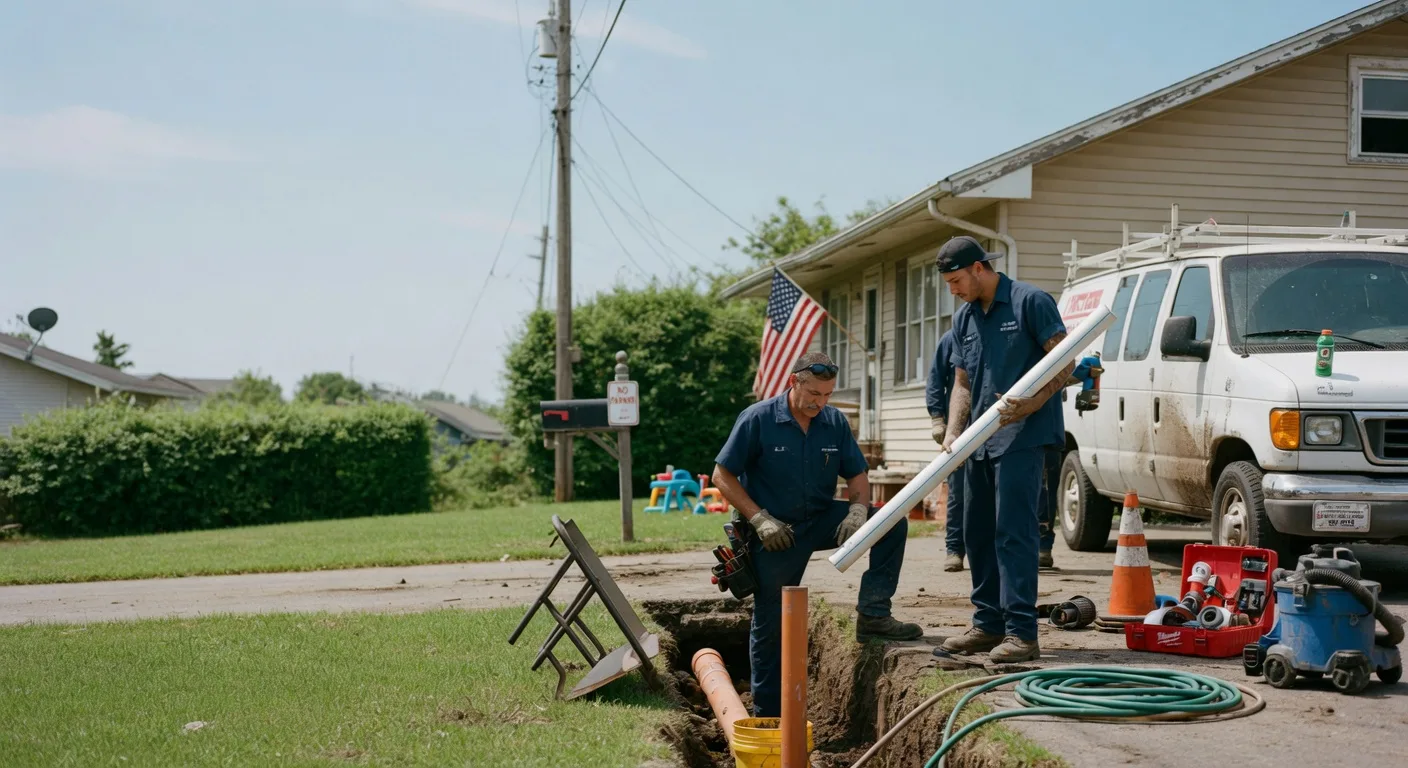
You have been told the sewer line may need replacing, and you want to know if that means digging it all up. Trenchless repair avoids that. The plumber works from one or two small access pits, or from an existing cleanout, and either lines the old pipe from the inside or pulls a new pipe through the old path.
It is an option when the line is cracked, offset at a joint, or split by root intrusion at a clay joint, but still runs as one continuous pipe. Cast iron choked with scale can sometimes be lined too, after the scale is cleared. That usually means hydro jetting first, then a camera inspection to confirm the pipe condition.
It is not an option when the pipe has collapsed, when a bellied line holds water and the slope has to be corrected, or when sections are crushed or missing. A liner follows the old path, so a sag stays a sag. Those jobs need open excavation.
The camera inspection decides it. If the main line clogs again after every Drain Cleaning visit, the pipe may be failing, not just dirty.
Cost depends on how deep and how long the line is, how many access points are needed, the materials used, how much has to be opened up or removed above it, and any permit or code requirement. Expert Plumbers Co is a referral service, not a plumbing contractor. Call (380) 262-9173 and we will refer you to a plumber serving Lyndon Center, VT who can inspect the line.
Before any lining starts, ask the plumber to confirm where every side connection joins the main. Branches such as a second bathroom or a laundry line have to be reopened from the inside once the liner sets, and the camera run afterwards should show each one open. Tell the plumber about earlier backups, the age of the house and any past repairs, because older homes often have clay, cast iron and fiber pipe in the same run, and the liner has to bond to each. The finished pipe is slightly narrower inside, but its surface is smooth, so flow usually improves. Plan around laundry and showers while the liner cures, since the line cannot be used until it has set. Ask for the recording of the finished pipe and keep it with your house papers. It helps if you sell the home, and it shows the next plumber exactly what was installed and where it runs.
Are flushable wipes really a problem for drain lines?
You flush a wipe that says flushable, and a week later the toilet is slow or the whole line gurgles. Yes, they are a problem.
Toilet paper falls apart in water within minutes. Wipes are woven fibre and hold together. They travel down, then catch on a rough spot: a clay joint, a root hair, a bend, or a coat of grease on the pipe wall. The next wipe snags on that one. Over weeks they twist into a rope that traps paper and everything else behind it.
Signs to watch for: a slow toilet, gurgling from a tub or sink when you flush, or a clog that keeps returning a few weeks after it is cleared.
Safe homeowner check: stop flushing wipes and try a plunger on the one toilet. Do not keep flushing to see if it clears. If water is rising toward the rim, stop and wait.
Stop running water and call now if more than one drain is backing up, or if sewage shows in a floor drain or tub. That points to the main line, not the toilet.
A cable machine often pulls a wipe mass out of a single branch. A packed main line, or one with grease or roots in it, may need hydro jetting, and a camera shows which. Cost depends on access, how far down the line the blockage sits, and how much has to be opened. Expert Plumbers Co is a referral service. Call (380) 262-9173 for Emergency Drain Cleaning referrals in Lyndon Center, VT.
To stop it coming back, give the plumber the full history of what has gone down the toilet, including the brand of wipe and how often. Many packages say flushable, but that is a label, not a test the pipe has to pass. Keep a small covered bin next to the toilet so the habit is easy to change, and tell everyone in the house, including guests and children. If a wipe mass has been pulled out of the line, ask to see it, because its size gives a rough idea of how much is still lodged further along. In older homes with clay or cast iron, rough joints and scale make the pipe catch wipes far sooner than smooth plastic pipe does, so a line that took them for years can suddenly start clogging. After the line is cleared, a slow toilet that stays slow suggests another cause.
Can a drain cable or hydro jetting damage old pipes like cast iron, clay or thin-wall pipe?
Yes, it can, and a good plumber knows that before the machine is switched on. Old pipe is not equally fragile everywhere, and the choice of tool depends on what the pipe is made of and what shape it is in.
Cable machines spin a cutting head against the pipe wall. In sound pipe that is fine. In clay with offset joints, the head can catch on a lip and snag. In cast iron with heavy scale, a cutting head can knock loose flakes, and in a pipe already thinned by corrosion it can punch through. Thin-wall plastic or older Orangeburg-type fiber pipe can be gouged or deformed.
Hydro jetting pushes water at high pressure through a nozzle. On solid pipe it cleans the walls better than a cable. On a cracked clay pipe, a corroded cast iron stack, or a joint that has already shifted, that pressure can widen the damage or send water out into the soil.
So how does the plumber decide? Usually from several clues:
The age and material of the house and the pipe, which tells the plumber what to expect.
Past history, such as repeated roots, earlier repairs, or a line that has never been inspected.
How the cable behaves. A head that bounces, stops at the same distance, or comes back with pipe chips or rust flakes suggests the pipe itself is damaged.
A camera look first. This is the most direct answer. If the line is fragile or offset, the plumber can choose a gentler head, lower pressure, or no jetting at all.
If you suspect old pipe, say so on the phone. Tell the plumber the age of the house and the pipe material if you know it. Ask whether the tool will be matched to the pipe, and whether a camera look comes first.
Sometimes the honest answer is that a quick clearing is worth the risk to get water moving, with a plan to inspect afterward. Sometimes it is not. Either way, the decision should be explained to you before the work starts, not after.
If you need a drain cleared in Lyndon Center, VT, Expert Plumbers Co can connect you with an independent local plumber at (380) 262-9173.
Does drain cleaning or sewer line repair need a permit?
You need a drain cleared or a sewer line fixed, and you want to know whether the work needs a permit before anyone starts. The answer depends on what is being done.
Drain cleaning usually needs no permit. Clearing a blockage with a cable machine, running a hydro jet, or putting a camera in the line does not change the plumbing system, so most areas treat it as maintenance.
Repair or replacement of a building sewer usually does need one. The building sewer is the pipe from the house to the main in the street. Fixing a collapsed section, replacing a root-damaged clay line, or digging out a bellied run changes the system, so it is normally permitted and inspected. If the dig reaches the street, curb or public right of way, a separate permit may be needed. Rules vary by area, so check with your local building or public works office, or ask the plumber what applies in Lyndon Center, VT.
The cause points the way. Root intrusion at a clay joint, grease build-up on the pipe wall, scale in cast iron or a blocked vent stack are usually cleaning jobs. A failed sewer lateral, a bellied line that holds water, or a broken pipe is a repair, and that is where permits come in.
One slow fixture rarely leads to a permit question. If every drain in the house is backing up, the main line is involved, and a camera inspection will show whether cleaning will do or a repair is needed.
Safe homeowner check: Find your cleanout and note where it is. Find out where your property line sits, since that affects who is responsible for which part of the line. Call your local building department and ask what work needs a permit.
Stop running water and call now if sewage is coming up inside, if the yard is wet or sunken over the line, or if you smell sewage. Safety comes before paperwork.
A cable machine is enough for a soft clog. Hydro jetting is the next step for grease or scale. A camera inspection shows whether a repair is needed, and that finding is usually what leads to a permit.
Expert Plumbers Co is a referral service. We connect you with an independent local plumber in Lyndon Center, VT. Call (380) 262-9173.
Ask the plumber who handles the permit, whether an inspection is required, and how that affects the schedule. The scope depends on how much of the line has to be opened up, access, parts and materials, any right-of-way work, and the code requirements in your area.
The plumber wants to pull the toilet to reach the line. Why would they do that?
You called about a slow drain, and now the plumber says the toilet has to come off the floor. It is actually a common and sensible move, and it is often the cleanest way in.
A cable or jetting hose needs a way into the line. The best entry is a cleanout, a capped pipe fitting on the main drain. Many houses do not have one, or it is buried, painted over or blocked by a wall. Without a cleanout, the toilet is usually the best access point in the house. Pulling it exposes the closet flange and gives the plumber a short, straight shot into the closet bend and then into the main. Going in through a sink or tub means tight turns and a trap, and the tool may never reach the real problem.
It matters most when the blockage is past the branch lines. Roots at a clay joint, a belly holding water, or grease further down the main sit well beyond the bathroom. A straight path lets the cable or jet hose get there with enough control to clear it and, if a camera is used, to see what the pipe looks like.
Think about whether it is one fixture or the whole house. If only the bathroom sink is slow, the plumber should work at that sink. If the toilets gurgle, the tub backs up and a floor drain bubbles, the problem is in the main, and pulling the toilet is a reasonable way to reach it.
Safe homeowner check: look in the basement, crawl space or outside wall for a capped cleanout fitting on the main drain, and tell the plumber where it is. Do not pull the toilet yourself unless you are comfortable with it. The bolts can seize, and the bowl is heavy.
Stop running water and call now if sewage is coming up in a tub or floor drain, if the toilet is overflowing, or if you smell sewer gas.
A cable machine is enough for a simple clog near the closet bend. Roots, a belly or heavy build-up usually call for a camera inspection first, and hydro jetting to clean the pipe wall.
Expert Plumbers Co is a referral service. We connect you with an independent local plumber in Lyndon Center, VT. Call (380) 262-9173.
Ask the plumber if a cleanout will be added so the next visit does not need the toilet pulled. Also ask about the new wax ring and any damaged bolts or flange, since the toilet must be reset and sealed afterward. Scope depends on access, parts, the condition of the floor around the flange, and any code requirement for adding a cleanout.